
AI Revolutionizes Legal Web Design: Speed, Savings, & Success for Firms
In an era where a law firm's digital footprint often dictates its reach and reputation, the ability to establish and maintain a compelling online presence has become paramount. For legal professionals, whose expertise lies in jurisprudence rather than intricate web architecture, the traditional path of website development has often been fraught with challenges—ranging from prohibitive costs and lengthy timelines to the steep learning curve of technical maintenance. The digital landscape is unforgiving; a dated, slow, or non-responsive website can deter potential clients faster than any competitor's marketing campaign, making the quest for an efficient, effective, and elegant online platform a perpetual balancing act for attorneys and firm owners.
However, a seismic shift is underway, propelled by the relentless march of artificial intelligence. Recent insights, notably from industry experts like SiteGround, reveal a revolutionary trend: AI is dramatically accelerating web development speed by an astonishing 55%. This isn't merely an incremental improvement; it represents a fundamental redefinition of how websites are conceptualized, built, and deployed. For small to medium-sized businesses (SMBs), a category that often includes independent law practices and boutique firms, this means the once-daunting technical barriers to creating sophisticated, high-performance websites are rapidly dissolving. The promise of AI is not just faster creation, but a democratization of advanced web capabilities, putting professional-grade digital tools within reach of those who previously found them inaccessible or too costly.
This transformative power of AI in web development holds profound implications for the legal sector. Imagine a world where your firm's website isn't just a static brochure but a dynamic, intelligent hub that attracts clients, streamlines intake, and enhances your professional image, all while being built and maintained with unprecedented efficiency. This is precisely the future that AI-powered platforms are ushering in, offering law firms the opportunity to leapfrog traditional development bottlenecks and establish a formidable digital presence. For law firm owners, attorneys, and legal professionals, understanding and leveraging these advancements is no longer a luxury but a strategic imperative to thrive in a competitive, digitally-driven market. It's about harnessing technology not just to keep pace, but to lead.
The Digital Imperative: Why a Robust Online Presence is Non-Negotiable for Law Firms
In today's hyper-connected world, a law firm's website is no longer an optional accessory; it is the cornerstone of its marketing, client acquisition, and reputation management strategy. Gone are the days when word-of-mouth referrals alone could sustain a thriving practice. Modern clients, whether individuals seeking personal legal advice or businesses requiring corporate counsel, invariably begin their search online. A recent study by Clio indicated that approximately 70% of legal consumers start their search for an attorney on the internet, highlighting the critical role a firm's digital presence plays in the initial client journey. Without a professional, user-friendly, and informative website, law firms risk becoming invisible to a vast segment of their potential clientele, ceding valuable ground to digitally savvy competitors.
Beyond mere visibility, a well-designed website serves as a powerful testament to a firm's professionalism, expertise, and client-centric approach. It acts as a 24/7 virtual storefront, offering detailed information about services, attorney bios, case studies, and thought leadership content. This digital hub allows potential clients to vet a firm's capabilities and determine if it aligns with their specific legal needs before ever picking up the phone. A website that effectively communicates a firm's value proposition, showcases its unique strengths, and provides clear pathways for engagement significantly enhances trust and credibility, which are foundational elements in the legal profession where client relationships are built on confidence.
The historical challenges of web development for law firms have often been a significant deterrent, however. The process typically involved substantial upfront investments, lengthy development cycles, and the ongoing burden of technical maintenance, security updates, and content management. For attorneys already stretched thin with caseloads and client demands, dedicating resources to mastering complex web technologies was simply not feasible. This often led to firms settling for generic, static websites that quickly became outdated, or deferring crucial updates due to the perceived time and financial overhead, ultimately hindering their digital effectiveness.
This is precisely where AI emerges as a transformative force, directly addressing these long-standing pain points. By automating many of the intricate and time-consuming aspects of website creation and management, AI-powered platforms are fundamentally changing the economics and accessibility of high-quality web development for law firms. It means that legal professionals can now achieve the sophisticated online presence they need to compete effectively, without having to divert their focus from their core legal practice. AI isn't just making web development faster; it's making it smarter, more affordable, and crucially, more aligned with the strategic objectives of modern law firms.
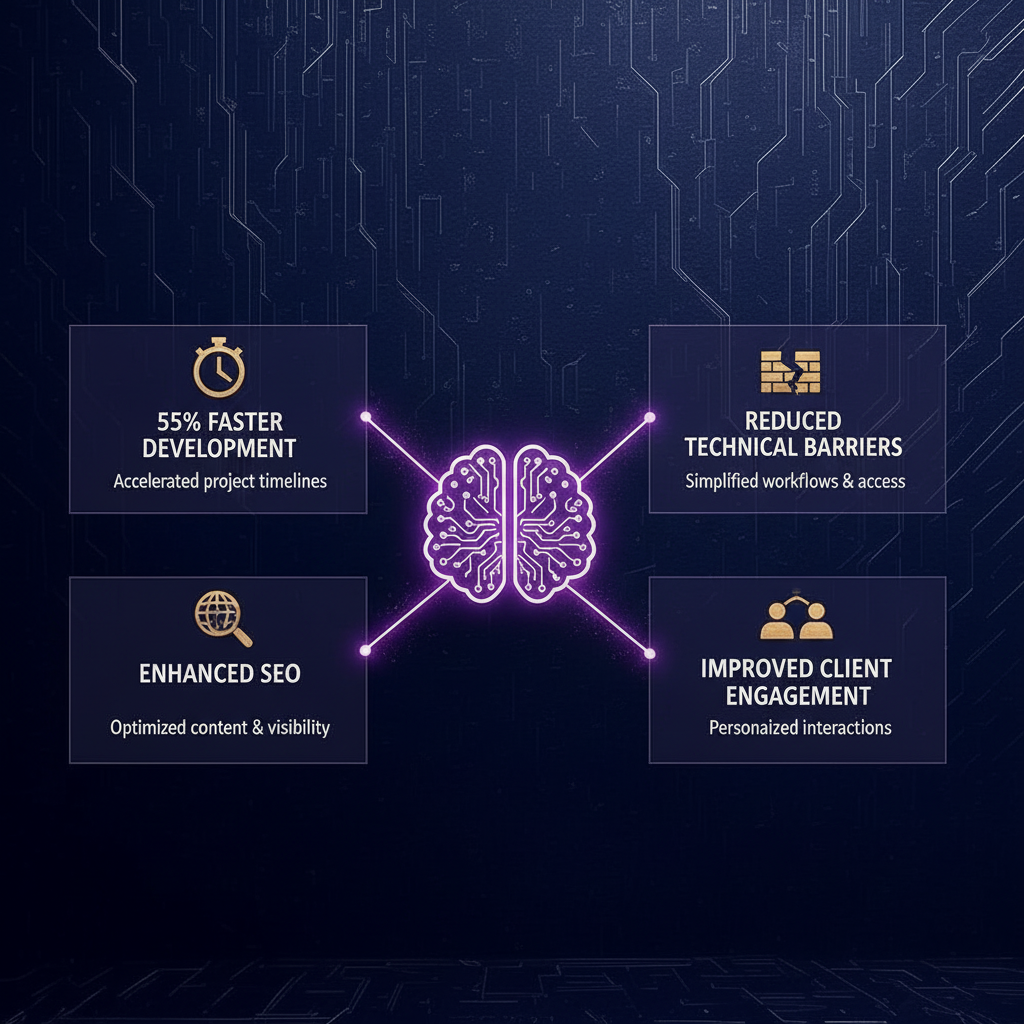
AI's Transformative Impact on Web Development Speed and Accessibility
The trending news, underscored by expert insights from SiteGround, highlights a pivotal development: AI is boosting web development speed by an astounding 55%. This statistic is not just a marketing claim; it reflects a fundamental shift in the underlying processes of website creation. Traditionally, building a website involved a painstaking, manual process of coding, design, content integration, and testing. Each step was a bottleneck, requiring specialized skills and significant time investment. AI, however, is disrupting this paradigm by automating repetitive tasks, generating code, and even suggesting design elements, thereby drastically reducing the human effort and time required for development.
How does AI achieve such remarkable speed enhancements? It leverages sophisticated algorithms and machine learning to analyze vast datasets of existing websites, design patterns, and user behaviors. When a developer or even a non-technical user initiates a project, AI can instantly generate code snippets, propose layout options based on best practices, and even create placeholder content tailored to the industry. Tools can convert design mock-ups into functional code with unprecedented speed, automate cross-browser compatibility testing, and even predict potential performance issues before they arise. This intelligent automation frees up human developers to focus on higher-level strategic decisions and custom features, rather than being bogged down by boilerplate coding.
Crucially, this acceleration in development speed directly translates to lowering technical barriers for non-technical SMBs, including law firms. For legal professionals who lack an in-house IT department or deep coding expertise, the prospect of building or updating a website has historically been a source of frustration and significant expense. AI-powered platforms simplify complex processes into intuitive, user-friendly interfaces, often utilizing drag-and-drop functionalities or natural language commands. This means a law firm owner can articulate their vision for a website, and the AI can translate it into a functional design, significantly reducing the reliance on specialized developers and empowering firms to take greater control over their digital assets.
The benefits extend beyond mere speed and accessibility. Faster development cycles mean quicker market entry for new firms or rapid deployment of updated services for existing ones. It allows for more iterative improvements, enabling firms to respond agilely to market trends, client feedback, or regulatory changes by easily updating their online presence. Furthermore, by streamlining the development process, AI inherently lowers the overall cost associated with building and maintaining a professional website. This cost-efficiency is particularly impactful for smaller law firms and solo practitioners, allowing them to allocate more resources to their core legal services while still maintaining a cutting-edge digital storefront that rivals larger, more established competitors.
- ✓AI-Powered Content Generation: Automatically drafts legal FAQs, blog posts, and service descriptions, ensuring SEO optimization and professional tone.
- ✓Automated Responsive Design: Ensures flawless display and functionality across all devices (desktops, tablets, smartphones) without manual adjustments.
- ✓Integrated SEO Optimization: AI analyzes keywords, content structure, and technical elements to boost search engine rankings for legal services.
- ✓Enhanced Security & Compliance Features: Implements robust security protocols and assists in maintaining data privacy compliance relevant to legal standards.
- ✓Seamless Client Portal Integration: Facilitates secure, AI-driven client communication, document sharing, and case updates directly through the website.
- ✓Intelligent Lead Capture & Appointment Booking: Deploys AI voice assistants or chatbots for 24/7 lead qualification and automated scheduling.
- ✓Scalability for Growth: Designs websites that can easily expand with a firm's evolving services and client base, future-proofing digital infrastructure.
Beyond Speed: Enhancing User Experience and Client Engagement
While the speed and cost-efficiency gains offered by AI in web development are undeniably attractive, the true long-term value for law firms lies in its ability to profoundly enhance user experience (UX) and foster deeper client engagement. A fast-loading, technically sound website is merely the foundation; an AI-powered platform elevates this to an interactive, personalized journey for every visitor. By analyzing user behavior patterns, such as pages visited, time spent, and search queries, AI can dynamically adapt content and recommendations, presenting information that is most relevant to a potential client's specific legal needs. This level of personalization transforms a generic visit into a highly targeted and engaging experience, significantly increasing the likelihood of conversion.
AI also plays a crucial role in optimizing website navigation and interface design, making legal information more accessible and understandable. Law firms often deal with complex legal jargon and intricate service offerings. AI can help structure content logically, suggest intuitive menu layouts, and even provide real-time explanations of legal terms, ensuring that visitors can easily find the information they need without feeling overwhelmed. This improved clarity and ease of use not only enhances the user experience but also positions the firm as transparent and client-focused, building trust even before initial contact is made. A seamless journey through the website reflects positively on the firm's overall professionalism and efficiency.
Furthermore, the integration of AI-powered features like virtual assistants and chatbots directly into the website represents a quantum leap in client engagement. These intelligent agents can provide instant answers to common questions, guide visitors through service offerings, qualify leads based on predefined criteria, and even book initial consultations automatically, 24/7. For a potential client facing an urgent legal issue, having immediate access to information and the ability to schedule an appointment without delay can be a decisive factor in choosing a firm. This always-on availability significantly extends a firm's operational reach, ensuring that no potential client inquiry goes unanswered, regardless of business hours.
This continuous, intelligent interaction fosters a sense of responsiveness and modernism that resonates deeply with today's digitally native clients. By offering a website that doesn't just display information but actively engages and assists, law firms can differentiate themselves in a crowded market. The ability of AI to learn and adapt over time means that the website continuously improves its ability to serve clients, offering an ever-more refined and effective digital experience. This translates directly into higher client satisfaction, stronger brand loyalty, and ultimately, a more robust pipeline of qualified leads for the firm.
Navigating Compliance and Security in AI-Powered Legal Websites
For law firms, the adoption of any new technology, especially one as powerful as AI in web development, must be meticulously balanced with an unwavering commitment to compliance, data privacy, and ethical considerations. The legal industry operates under stringent regulatory frameworks, including client confidentiality, data protection laws like GDPR and CCPA, and professional conduct rules set by bar associations. Therefore, while AI offers immense benefits in speed and engagement, law firms must ensure that their AI-powered websites are built and maintained with the highest standards of security and legal compliance. Ignoring these aspects can lead to severe reputational damage, significant financial penalties, and even loss of license.
AI tools can indeed be invaluable in assisting with compliance, particularly in managing website content and data handling. For instance, AI can be programmed to review website content for adherence to specific legal advertising rules, ensuring that claims are accurate and ethical. It can also help implement and monitor data privacy policies, ensuring that client information collected through web forms or chat interactions is handled in accordance with all relevant regulations. AI-powered security features can proactively identify and mitigate vulnerabilities, protecting sensitive client data from cyber threats. However, these capabilities require careful configuration and ongoing oversight to ensure they align with the unique ethical obligations of the legal profession.
Emphasizing secure development practices is paramount. Even with AI automating much of the coding, the underlying architecture must be robust and designed with security by default. This includes implementing strong encryption for data in transit and at rest, regular security audits, and adherence to industry best practices for secure coding. Law firms must partner with web development providers who possess a deep understanding of legal industry specific security requirements and who can demonstrate a proven track record of building secure, compliant digital platforms. The 'set it and forget it' mentality is particularly dangerous in the legal context, where the stakes of a data breach are exceptionally high.
Ultimately, while AI streamlines and enhances web development, it does not absolve law firms of their professional responsibilities. The role of expert oversight remains critical. Law firm owners and managing partners must ensure that their AI-powered web development solutions are not only technologically advanced but also ethically sound and legally compliant. This involves thorough due diligence in selecting platforms and providers, clearly defining AI's scope and limitations, and regularly reviewing the website's functionality and content for adherence to all professional and regulatory standards. By combining the efficiency of AI with vigilant human oversight, law firms can confidently leverage cutting-edge web technology while upholding their fundamental duties to clients and the profession.

HODOS 360: Your Partner in AI-Powered Web & Mobile Development for Law Firms
At HODOS 360, we understand that law firms and legal professionals require more than just a website; they need a strategic digital asset that reflects their expertise, attracts their ideal clients, and supports their growth. Our AI-powered Web & Mobile Development service is specifically engineered to meet these unique demands, directly addressing the challenges of speed, cost, and technical complexity that have historically hindered legal practices. By leveraging the same AI advancements that are accelerating web development across industries, HODOS 360 provides a tailored solution that empowers law firms to establish a commanding online presence with unprecedented efficiency and effectiveness, transforming the way they connect with prospective clients and manage their digital identity.
We harness the power of artificial intelligence to streamline every aspect of website creation, from initial design to ongoing optimization. Our platform utilizes AI to rapidly build sophisticated, professional websites, drastically cutting down the development time that traditionally takes months into mere weeks. This means your firm can launch a cutting-edge online presence faster, capitalizing on market opportunities and reaching potential clients sooner. Beyond speed, our AI-driven approach ensures responsive design by default, guaranteeing that your firm's website looks and functions flawlessly on any device—be it a desktop, tablet, or smartphone—a critical factor in today's mobile-first world where a significant portion of legal searches occur on handheld devices. This commitment to responsive design ensures maximum accessibility and a superior user experience for all your visitors.
Furthermore, HODOS 360's AI-powered Web & Mobile Development service is deeply integrated with advanced SEO optimization strategies from the ground up. Our AI analyzes legal industry keywords, competitor landscapes, and search engine algorithms to craft a website structure and content that is optimized for higher visibility. This means your firm's website is more likely to appear prominently in search results when potential clients are looking for legal services, driving organic traffic and generating qualified leads. We understand that a beautiful website is only effective if it can be found, and our AI ensures that your firm stands out in the crowded digital legal marketplace, making it easier for clients to discover your specialized services.
By choosing HODOS 360, law firms gain a distinct competitive advantage. Our comprehensive platform not only provides AI-powered website building, responsive design, and SEO optimization, but it also integrates seamlessly with our other core services tailored for the legal sector. Imagine a website built by HODOS 360 that effortlessly connects with our AI Voice Assistants for 24/7 lead qualification and appointment booking, or leverages our AI Marketing Platform for automated content generation and social media management. We provide a holistic, intelligent ecosystem designed to future-proof your firm's digital strategy, ensuring that your online presence is not just a static advertisement but a dynamic, intelligent engine for growth and client engagement. Partner with HODOS 360 and transform your digital footprint into a powerful asset that works tirelessly for your firm.