
AI & Law: Navigating the Future of Legal Practice by 2026 with HODOS 360
The legal profession stands at the precipice of its most significant technological revolution since the internet, with Artificial Intelligence (AI) poised to fundamentally redefine practice by 2026. A recent trending article, drawing insights from 85 legal professionals across diverse sectors—from seasoned practitioners to legal tech innovators and esteemed academics—underscores this imminent shift, painting a vivid picture of how AI is expected to shape every facet of the industry. This collective foresight isn't merely speculative; it represents a growing consensus that AI will not just augment existing processes but will create entirely new paradigms for efficiency, strategy, and client service. For law firm owners, attorneys, and legal professionals, understanding these predictions is no longer optional; it's an imperative for survival and growth in an increasingly competitive and technologically advanced legal landscape. The conversation has moved beyond 'if' AI will impact law to 'how' and 'how quickly,' demanding proactive engagement and strategic adoption.
The implications of AI's integration are far-reaching, promising to alleviate the burden of repetitive tasks, enhance the accuracy of legal research, and unlock unprecedented levels of data-driven insights. From automating document review and drafting to powering sophisticated predictive analytics for case outcomes, AI is set to free up invaluable attorney time, allowing legal professionals to focus on higher-value, strategic work that demands human judgment, empathy, and nuanced understanding. This shift isn't about replacing the human element but rather empowering it, amplifying legal expertise with computational prowess. The challenge, however, lies in discerning which AI solutions offer true value, how to ethically integrate them into existing workflows, and how to harness their full potential to meet evolving client expectations and regulatory demands. The legal industry, historically cautious about rapid technological adoption, is now facing a unique inflection point where innovation is not just a competitive advantage but a foundational requirement for modern practice.
As the legal profession braces for this transformative wave, the emphasis shifts to finding comprehensive, reliable, and intelligent systems that can seamlessly integrate AI into the very fabric of law firm operations. The goal is to move beyond piecemeal solutions and embrace platforms that offer a holistic approach to AI-powered legal management, addressing everything from client intake to case resolution and financial oversight. Such systems are designed not just to automate but to optimize, providing predictive insights that can inform strategic decisions, improve resource allocation, and ultimately deliver superior client outcomes. The journey towards an AI-enabled legal future is complex, but with the right technological partner, law firms can confidently navigate these changes, turning potential disruption into unparalleled opportunity. This article will delve into the critical predictions for AI in law by 2026 and demonstrate how integrated solutions like HODOS 360's AI Law Firm Management system are precisely what legal professionals need to thrive in this new era.
The Inevitable March of AI into Legal Practice: A New Era Dawns
The legal sector, often perceived as an industry slow to embrace technological disruption, is now at an undeniable crossroads. The insights from 85 legal professionals, as highlighted in the trending article, confirm what many forward-thinking firms already recognize: AI is no longer a futuristic concept but a present-day reality rapidly redefining professional standards and operational efficiencies. This isn't merely an incremental upgrade; it's a paradigm shift driven by the exponential growth of data, the increasing complexity of legal challenges, and a client base demanding greater value and transparency. The historical caution surrounding technology adoption in law is giving way to a strategic imperative, as firms realize that leveraging AI is crucial for maintaining competitiveness and relevance in a rapidly evolving market.
Industry reports consistently underscore this accelerating trend. According to a recent survey by Thomson Reuters, approximately 53% of legal professionals believe AI will significantly impact the legal industry within the next five years, with a notable increase in firms actively exploring or implementing AI solutions. Furthermore, Gartner predicts that by 2025, legal departments will increase their spending on legal technology by at least 30% to improve operational efficiency. This data isn't just numbers; it reflects a tangible shift in investment and strategic focus, indicating that firms are not just experimenting but are committing resources to integrate AI into their core operations. The competitive landscape is being redrawn, and firms that delay adoption risk being outpaced by more agile, AI-powered competitors.
The 'why now' for AI in law is multifaceted. Firstly, the sheer volume of legal data—from case precedents to regulatory filings and client communications—has become unmanageable through traditional methods. AI offers the only viable path to efficiently process, analyze, and derive insights from this data deluge. Secondly, client expectations have evolved; they demand faster, more cost-effective services and greater predictability in outcomes. AI directly addresses these demands by automating routine tasks, reducing human error, and providing data-driven forecasts. Thirdly, the economic pressures on law firms, including rising operational costs and the need for competitive billing, make efficiency gains through AI an attractive proposition. The confluence of these factors has created a perfect storm, making AI not just beneficial but essential for modern legal practice.
Consequently, the narrative around AI in law has shifted dramatically from skepticism to strategic integration. Early concerns about AI replacing lawyers have largely been assuaged by a clearer understanding of AI's role as an assistant, an enhancer, and a tool for augmenting human capabilities. Legal professionals now view AI as a means to elevate their practice, enabling them to dedicate more time to complex problem-solving, client relationship building, and strategic advisory roles. This evolving perspective highlights a maturing understanding of AI's potential, positioning it as a powerful ally in navigating the complexities of modern law and delivering superior service to clients who expect nothing less than excellence and innovation from their legal partners.
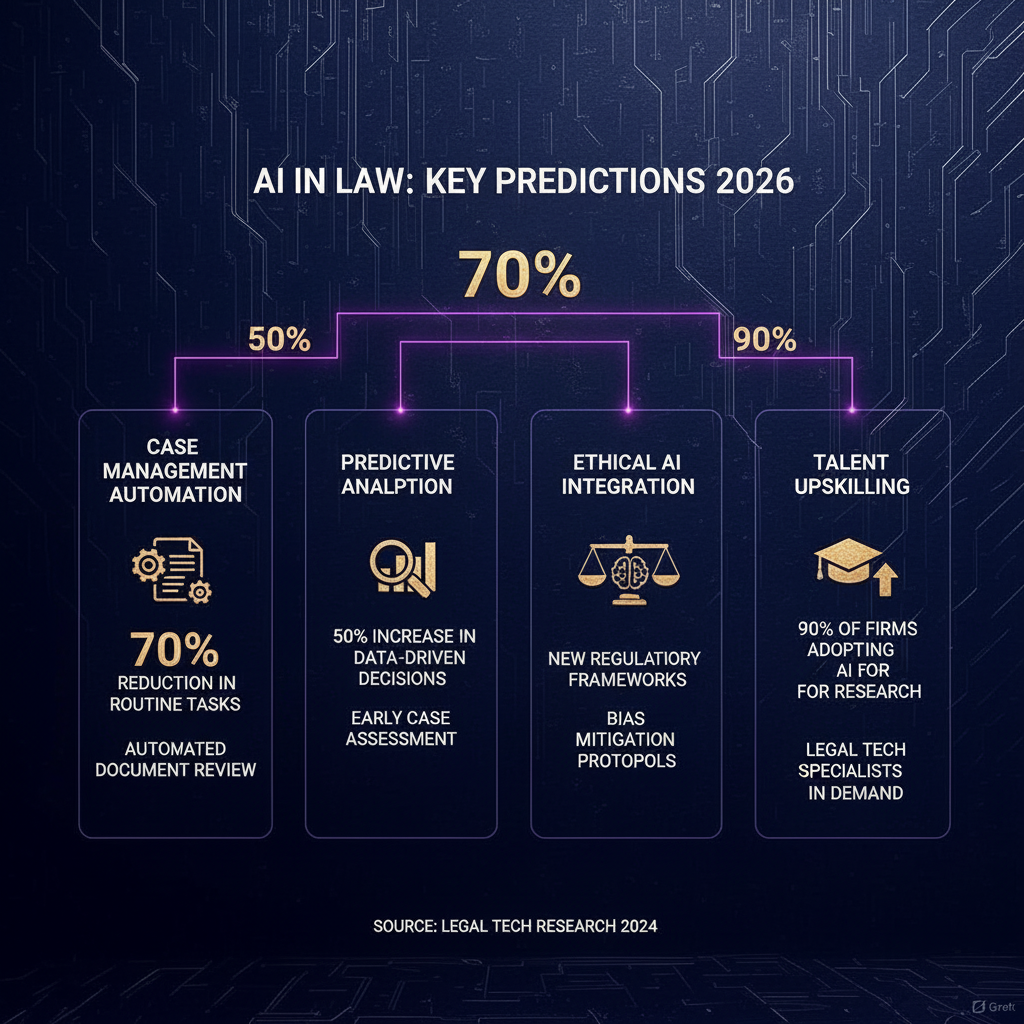
Redefining Efficiency: AI's Impact on Case Management & Operations
The most immediate and tangible impact of AI in law firms is the revolutionary potential it holds for operational efficiency, particularly within case management and administrative tasks. Historically, legal professionals have spent countless hours on routine, high-volume, low-value activities that are ripe for automation. AI-powered systems are now stepping in to transform these processes, enabling firms to dramatically reduce time and resource expenditure, thereby enhancing productivity and profitability. From the moment a new client is onboarded to the final resolution of a case, AI streamlines workflows, minimizes manual errors, and provides a level of organizational precision previously unattainable. This fundamental shift is not just about doing things faster; it's about doing them smarter, with greater accuracy and strategic foresight.
Consider the core components of law firm operations. In case management, AI excels at predictive analytics, offering insights into potential case outcomes based on vast datasets of historical cases, judicial rulings, and legal precedents. This allows attorneys to develop more informed strategies and advise clients with greater confidence. Task automation, another AI hallmark, can handle scheduling, deadline tracking, and document routing, ensuring that critical steps are never missed and resources are allocated optimally. For instance, AI can analyze case documents to identify key players, timelines, and relevant facts in mere seconds, a task that could take human paralegals days or weeks. This efficiency gain translates directly into reduced costs for clients and increased capacity for firms to handle more cases or focus on more complex, high-value work.
Billing and client intake, traditionally time-consuming administrative burdens, are also undergoing significant AI-driven transformation. AI-powered billing systems can automate time tracking, categorize expenses, and generate accurate invoices with minimal human intervention, dramatically reducing billing errors and improving cash flow. According to a recent report, firms leveraging AI for billing have seen a 20-30% reduction in billing cycle times and a significant decrease in unbilled hours. Similarly, AI-driven client intake platforms can automate the collection of client information, perform instant conflict checks, and even draft initial engagement letters, compressing what used to be a multi-day process into a matter of hours. This not only improves the client experience but also ensures compliance and reduces the administrative overhead associated with onboarding new matters.
Perhaps one of the most impactful applications of AI is in document automation and legal research. AI-powered document generation tools can draft contracts, pleadings, and other legal documents based on pre-set templates and specific case details, ensuring consistency and accuracy while saving countless hours of drafting time. Furthermore, advanced AI legal research platforms can sift through millions of legal documents, statutes, and case law precedents to find highly relevant information in a fraction of the time it would take human researchers. This capability not only accelerates discovery but also enhances the thoroughness and quality of legal arguments. A study by McKinsey estimated that legal professionals spend up to 23% of their time on tasks that could be automated by AI, highlighting the immense potential for efficiency gains across the entire spectrum of legal operations.
- ✓Enhanced Predictive Analytics for Case Outcomes and Strategic Planning
- ✓Automated Document Review, Drafting, and Management
- ✓Streamlined Client Intake and Onboarding Processes
- ✓Intelligent Legal Research and Discovery Acceleration
- ✓Optimized Billing, Time Tracking, and Financial Management
- ✓Personalized Client Communication and AI-Powered Support
- ✓Proactive Compliance Monitoring and Risk Mitigation
Beyond Automation: AI for Strategic Advantage & Growth
While the efficiency gains from AI are compelling, its true power extends far beyond mere automation. For law firms, AI presents an unprecedented opportunity to cultivate a strategic advantage, drive growth, and unlock new avenues for value creation. By transforming raw data into actionable insights, AI empowers legal professionals to make more informed decisions, anticipate market trends, and proactively identify opportunities and risks. This shift from reactive problem-solving to proactive strategic planning fundamentally changes the competitive landscape, rewarding firms that embrace data-driven intelligence as a core component of their operational and growth strategies.
One of the most significant strategic benefits of AI is its ability to provide sophisticated data-driven decision-making capabilities. AI platforms can analyze vast quantities of internal and external data—from historical case outcomes and judicial tendencies to economic indicators and regulatory changes—to identify patterns and predict future trends. This allows firms to refine their litigation strategies, optimize their resource allocation across practice areas, and even identify emerging legal needs that could lead to new service offerings. For example, by analyzing client data and market dynamics, an AI system might flag an upcoming regulatory change that impacts a specific industry, enabling the firm to proactively advise clients and position itself as an expert in that evolving niche. This foresight is invaluable in a fast-paced legal environment.
Firms that effectively leverage AI are also gaining a distinct competitive edge in the marketplace, attracting both top-tier talent and high-value clients. Modern legal professionals, particularly younger generations, are increasingly drawn to firms that demonstrate a commitment to innovation and provide them with advanced tools that enhance their work and career development. Moreover, sophisticated clients, especially businesses, are seeking legal partners who can offer not just legal expertise but also efficiency, predictability, and data-backed insights into their legal matters. A firm that can demonstrate how AI streamlines their processes, reduces costs, and improves strategic outcomes will stand out against those relying on traditional, less efficient methods. This translates directly into improved client acquisition and retention rates.
Furthermore, AI facilitates the development of entirely new service offerings and business models within law firms. Beyond traditional hourly billing, AI enables firms to offer value-added services such as predictive risk assessments, compliance monitoring as a service, or subscription-based access to AI-powered legal tools. For instance, an AI system could continuously monitor a client's contractual agreements for potential breaches or regulatory non-compliance, providing ongoing, proactive legal oversight that goes beyond traditional reactive legal advice. This diversification of services not only creates new revenue streams but also deepens client relationships, positioning the law firm as an indispensable strategic partner rather than just a service provider. The ability to innovate and adapt in this manner is a hallmark of future-proof legal practices.
Navigating the Ethical & Practical Landscape of AI in Law
While the promise of AI in law is immense, its implementation is not without its complexities, particularly concerning ethical considerations and practical challenges. The legal profession, by its very nature, is bound by stringent ethical rules related to confidentiality, client representation, and professional responsibility. Integrating AI requires careful navigation to ensure these foundational principles are upheld. Concerns around data privacy, the potential for algorithmic bias, and the ultimate accountability for AI-generated outcomes are paramount. Law firms must approach AI adoption with a clear understanding of these ethical pitfalls and implement robust safeguards to mitigate risks, ensuring that technology serves justice without compromising integrity or fairness.
One of the most critical ethical considerations revolves around algorithmic bias. AI systems are trained on vast datasets, and if these datasets reflect historical biases present in legal records or societal structures, the AI can perpetuate or even amplify those biases in its recommendations or predictions. This could lead to unfair outcomes for certain clients or demographics, directly conflicting with the legal profession's commitment to justice and equality. Therefore, law firms must demand transparency from AI vendors regarding data sources and algorithmic design, and implement rigorous testing and validation processes to identify and correct any inherent biases. The principle of 'human-in-the-loop' becomes indispensable here, where human oversight and judgment remain the final arbiters, ensuring ethical review of AI outputs.
Practically, implementing AI within a law firm also presents challenges related to data security and regulatory compliance. Legal data is highly sensitive, and any AI system handling client information must adhere to the highest standards of cybersecurity and data protection regulations, such as GDPR, CCPA, and various bar association rules. Firms must ensure that AI platforms are not only robust in their security architecture but also compliant with all relevant legal and ethical guidelines regarding data storage, processing, and access. This often necessitates thorough due diligence on vendors, clear data governance policies, and continuous monitoring to prevent breaches and maintain client trust. The onus is on the firm to ensure that technology enhances, rather than compromises, data integrity and confidentiality.
Finally, the successful integration of AI requires a significant investment in training and upskilling legal professionals. Attorneys and staff need to understand how AI tools work, their capabilities, and their limitations. This isn't about turning lawyers into data scientists, but empowering them to effectively leverage AI as an intelligent assistant. Firms must foster a culture of continuous learning, providing resources and training programs that equip their teams with the necessary digital literacy and critical thinking skills to interact with AI responsibly. A phased approach to AI implementation, starting with pilot programs and gradually scaling up, can help mitigate resistance, identify unforeseen challenges, and ensure a smoother transition, ultimately maximizing the return on investment and ensuring that the technology is truly adopted and utilized effectively across the organization.

Future-Proofing Your Practice: How HODOS 360 Delivers AI Law Firm Management
As the predictions for AI in law by 2026 become increasingly clear, the critical question for law firm owners and legal professionals shifts from 'what is AI?' to 'how can I effectively integrate it?' This is precisely where HODOS 360's AI Law Firm Management System emerges as the indispensable partner for future-proofing your practice. Our platform is not just a collection of tools; it's a comprehensive, intelligently designed ecosystem that directly addresses the evolving demands of the legal industry, empowering firms to harness the full potential of AI for unprecedented efficiency, strategic advantage, and sustainable growth. By consolidating critical functions like case management, billing, client intake, and document automation into a single, AI-powered solution, HODOS 360 eliminates the complexities of managing disparate systems and provides a unified, intelligent command center for your entire firm.
HODOS 360's AI Law Firm Management system is engineered to tackle the core challenges discussed, transforming them into opportunities. Our AI-powered case management capabilities go beyond simple task tracking; they offer predictive analytics that analyze historical data to inform litigation strategies, optimize resource allocation, and forecast potential case outcomes with greater accuracy. For billing, our system automates time tracking and invoice generation, drastically reducing administrative overhead and improving revenue cycles, enabling firms to recover valuable billable hours often lost to manual processes. The client intake module leverages AI to streamline onboarding, performing rapid conflict checks and data capture, ensuring a seamless and professional first impression while freeing up staff for more substantive tasks. Furthermore, our document automation features leverage AI to generate precise legal documents, from contracts to pleadings, reducing drafting time by up to 70% and minimizing human error.
What sets HODOS 360 apart is not just the breadth of our features but the depth of our AI integration and our commitment to seamless user experience and robust security. We understand that adopting new technology can be daunting, which is why our platform is designed for intuitive use and effortless integration into your existing workflows. Our scalable architecture ensures that HODOS 360 grows with your firm, whether you're a boutique practice or a large multi-office operation. Moreover, HODOS 360 places paramount importance on data security and ethical AI. Our systems are built with industry-leading encryption and compliance protocols, ensuring the utmost protection for sensitive client data. We also advocate for and facilitate the 'human-in-the-loop' approach, ensuring that AI augments, rather than replaces, the critical judgment and expertise of legal professionals.
Embracing HODOS 360's AI Law Firm Management system means more than just adopting new software; it means investing in a strategic advantage that will define your firm's success in the coming years. It means freeing your attorneys to focus on high-value legal work, enhancing client satisfaction through more efficient and data-driven services, and positioning your firm at the forefront of legal innovation. Don't let the future of law pass your practice by. The predictions for AI in legal by 2026 are not just forecasts; they are a call to action. Partner with HODOS 360 to navigate this transformative era with confidence, ensuring your firm is not just prepared for the future, but actively shaping it. Visit HODOS360.com today to discover how our AI Law Firm Management system can revolutionize your practice and secure your competitive edge.